
Elko City Directory Collections
There is no verified, publicly viewable Elko city-directory scan with a confirmed publisher, year, page, and sample entry in the research record. That is important. It means a researcher should not claim a Polk run, a chamber run, or a telephone-book sequence without seeing the item. The strongest documented starting points are the Elko County Library's local-history categories, the Northeastern Nevada Museum archives, a nationwide FamilySearch collection, and newspaper repositories. Each can support a careful city-directory search, but none should be represented as a verified local directory volume until staff or an image confirms it.
| Collection lead | Verified years or status | Where held | Access path |
|---|---|---|---|
| Local and regional phonebooks, microfilm, maps, and vertical files | Categories confirmed; item years not published in the inspected page | Elko County Library | Reference help, phone, Ask a Librarian, or in person |
| U.S. City and Business Directories | 1749-1990 nationwide collection; no Elko hit verified | FamilySearch | Online index; some images may require an account |
| Elko newspaper holdings | Multiple title runs with documented gaps | UNLV, library, and museum routes | Holdings inquiry, microfilm, or digitized issues where available |
| Elko Sanborn map | August 1897, three verified sheets | Library of Congress | Free online map view |
The table separates a confirmed collection category from a confirmed Elko directory item. A phonebook may contain a useful listing, while a map may only establish the block and building use. Keep the publication title, publisher, year, page, exact indexed spelling, role, address, and any cross-reference together whenever a real entry appears.
Note: A blank directory search, an unindexed shelf, and a collection that is not held are different outcomes worth recording separately.
Elko Directory Research Gap
FamilySearch provides a useful discovery layer because its U.S. City and Business Directories collection exposes name, occupation, and address fields. It is national, though, and research did not verify an Elko-specific result. Search there with surname variants, initials, prior surnames, and an address when available. Treat a result as an index lead until its image and locality agree with the person being traced. If the record does not show an image, save the returned wording and use it to make a narrow request at an Elko repository.
The FamilySearch city-directory collection is shown in the captured search interface below. Its filters can help form a request, but image availability and exact location coverage can vary.
Use any FamilySearch hit beside, not instead of, a local newspaper, map, marriage, or property source. A name-only match does not establish that two people are the same person.
Elko Directory Library Leads
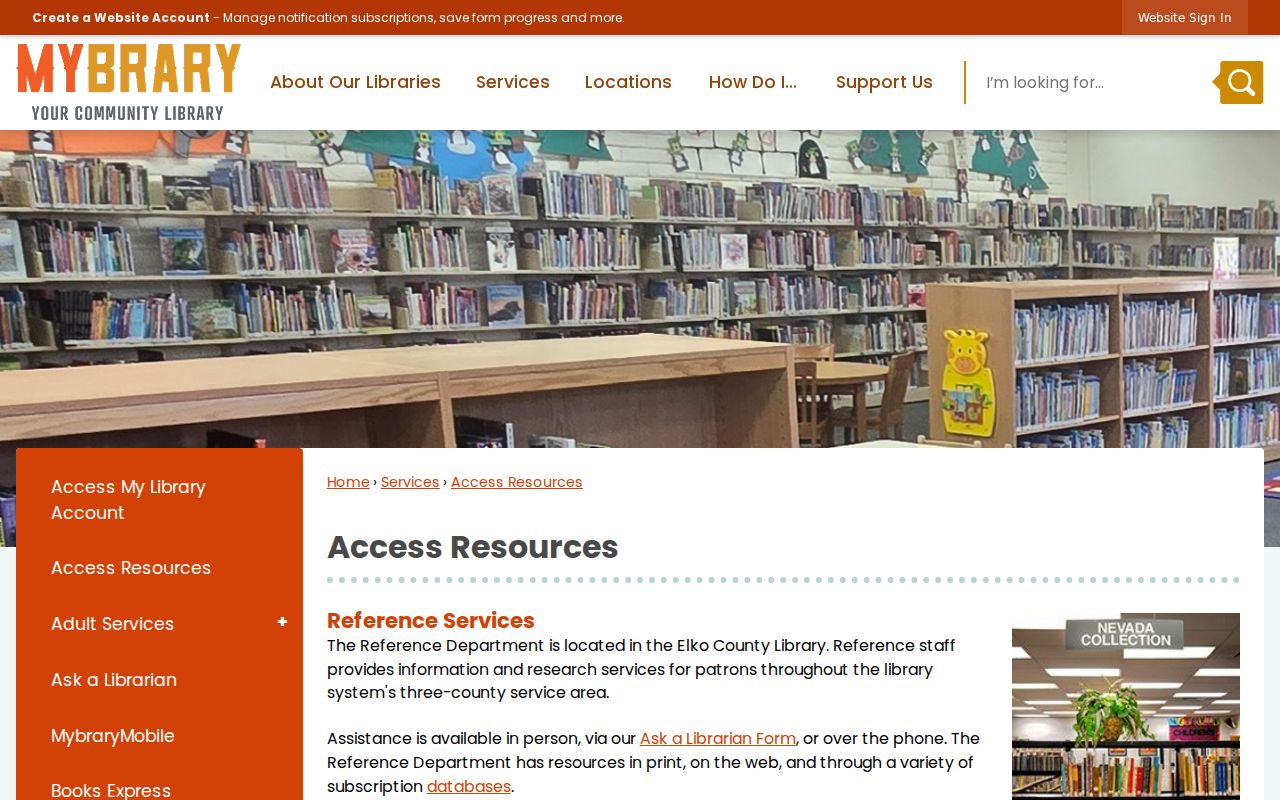
The Elko County Library access page identifies local and area newspapers, local and regional phonebooks, maps and atlases, microfilm, a mining collection, Nevada materials, pamphlets, postings, state documents, and vertical files. The library also describes a digital archive with yearbooks, newspaper archives, oral histories, and related projects. Exact titles, item-level search fields, and all Elko years were not exposed in the inspected text, so a focused question is more useful than a broad request for every person with a surname.
Give library staff the surname and variants, street or institution, approximate years, and the item sought. Ask whether the result is a hit, a gap, held but unindexed, not digitized, restricted, off-site, or not held. The library supports in-person assistance, phone help, and an Ask a Librarian route, which offers practical alternatives if a remote search screen is too thin.
The library local-history resources show the breadth of the Elko shelf rather than promising a single searchable directory database.
Phonebooks and vertical files can place a person or institution in a period, while maps and microfilm let the same search be checked against a street, issue, or block.
Elko Directory Newspaper Years
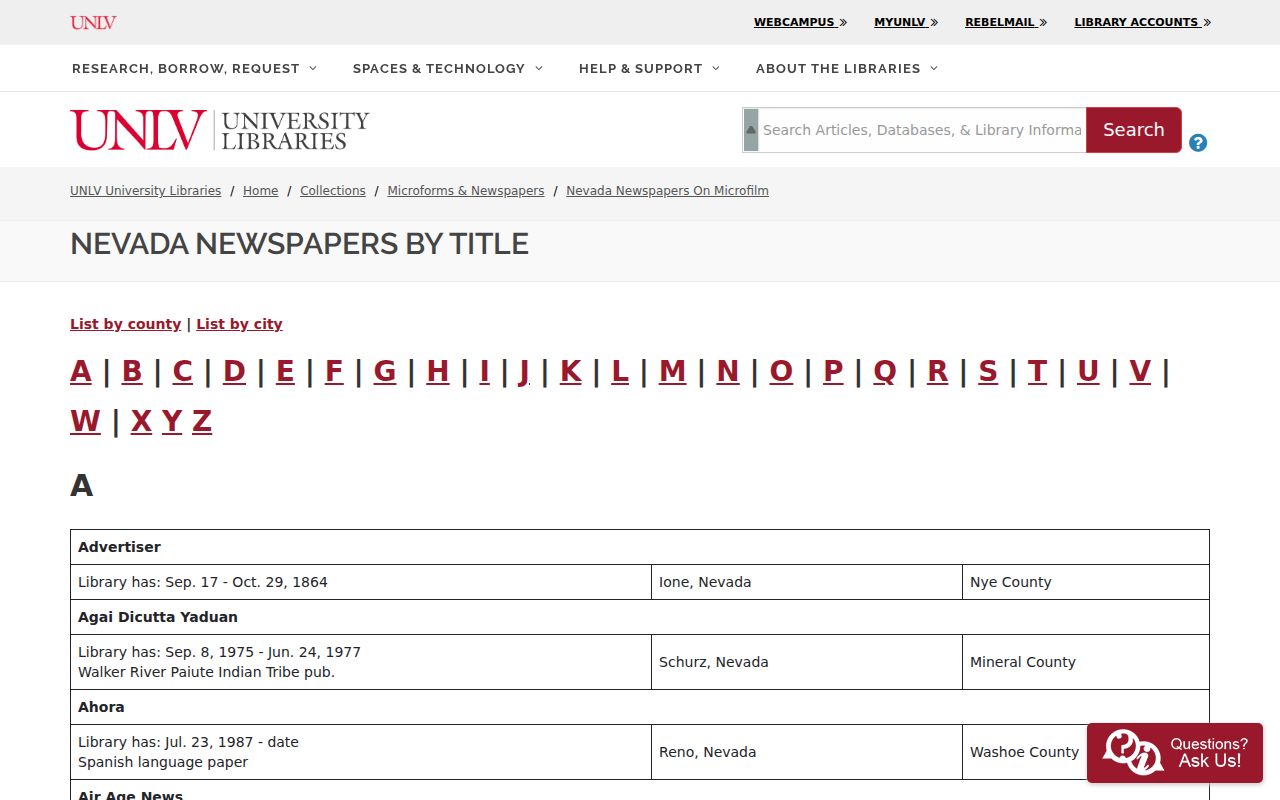
When a local directory scan is not verified, newspapers provide the best documented time layer. UNLV lists Elko Independent runs for 1869-1872, 1915-1964, 1965-1991, and 1994-1998. Its holdings also list Daily Independent from 1885-1915 with gaps, Daily Free Press from 1931 to the present, Weekly Elko Independent from 1872-1887, Weekly Independent from 1887-1914, Elko Chronicle in 1870, and Elko Post or Weekly Post from 1875-1880. These are holdings descriptions, not a guarantee that every issue or page is immediately online.
The UNLV Nevada newspaper title list is a useful way to choose a title and date range before requesting microfilm or collection help.
Search the surname with spelling variants, a street, organization, mine, or landmark. Then inspect the page image, because OCR can miss names and can turn a street line into the wrong words.
For 1875-1887, the Nevada State Library's Chronicling America guide identifies free digitized Weekly Elko Independent and Elko Independent material. A newspaper notice is a dated publication claim, not automatic proof of an address or continuous residence.
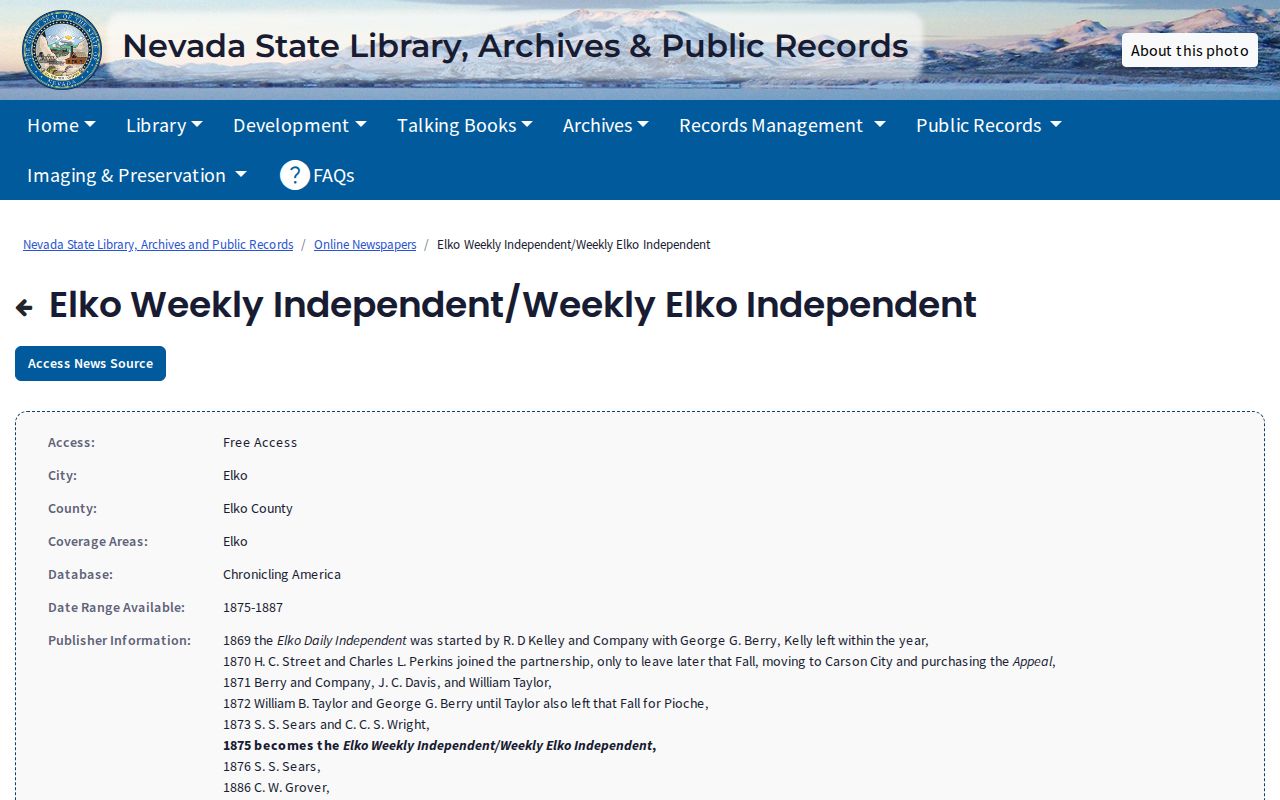
That free span can bridge the early county years, but documented gaps still matter. Record the title, issue date, page or image identifier, and whether the name was read from an image or found only by OCR.
Elko Directory Archive Requests
The Northeastern Nevada Museum Library & Archives holds historic newspapers, maps, letters, photographs, and manuscripts, with genealogy resources for Nevada families and community leaders. It is appointment-only, so the archive is the local fallback when a name, ranch, mine, civic body, or historical address needs context unavailable in a current portal. Research consultations and photo reproduction are available, but staff should be asked what is on-site, what is off-site, and what reproduction rights apply.
Reach the archive through the museum research page, by email at archives@museumelko.org, or by appointment Wednesday through Saturday, 9:00-5:00, at 775-738-7418. A request should name the person or street, date range, collection type, and desired result such as a citation, scan, transcription, or confirmation of absence.
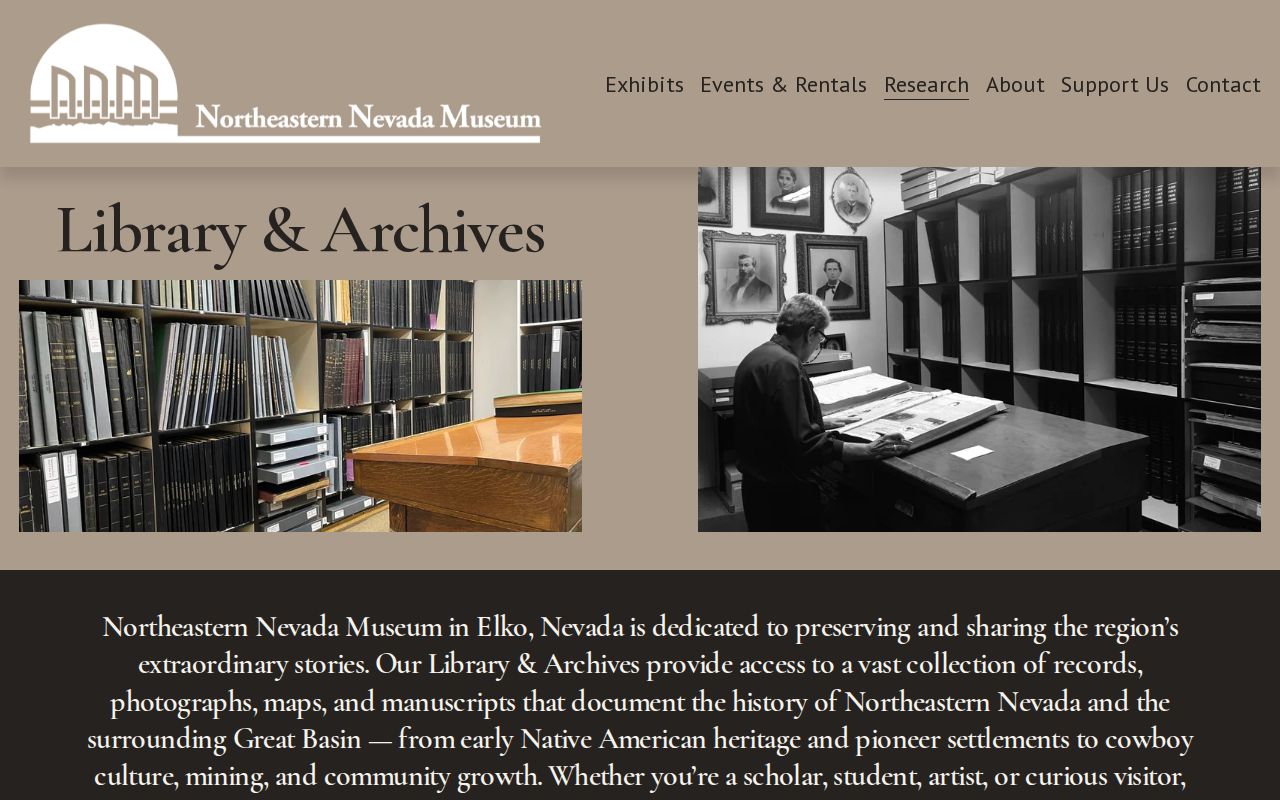
A staff reply that distinguishes “held but not indexed” from “not found” preserves a useful research trail and avoids treating a non-searchable collection as a negative result.
Reading an Elko Directory Lead
A confirmed directory entry is strongest when the image, year, and locality all fit the household. Capture the entry as it appears before standardizing any spelling. Its address may be a residence, business, mailing location, or a cross-reference, so compare the role shown in the entry with the source type. An occupation, spouse notation, or organization can help separate people with the same name, but it still needs a second dated source before it is treated as a resident fact.
| Publication facts | Title, publisher, year, page, repository, and image or call number. |
|---|---|
| Indexed name | Exact spelling, initials, surname order, and any cross-reference. |
| Address clue | Street, business, household, or other address context as printed. |
| Role clue | Occupation, organization, spouse, or other printed context, without assuming occupancy. |
| Verification | A dated newspaper, map, Recorder record, or archive item that supports the same person and place. |
- Criss-cross directory
- The street-order portion of some later directories, used to look from an address toward listed names. No verified Elko criss-cross volume was located.
- Householder index
- A list arranged around household heads or addresses. Its presence and terms must be confirmed in the actual volume.
- Abbreviation key
- The volume's own explanation of shorthand. Photograph or note it before interpreting marks beside names or addresses.
Trace an Elko Directory Household
A household trail works best as a sequence of dated, separate records. Begin with the clearest name and time, then preserve moves, spellings, and gaps rather than smoothing them away. If an old directory image is eventually found, pair its address with newspapers and maps from the same period. For a modern address-based chain, the Elko street directory leads to the parcel and Recorder workflow instead of repeating it here.
- Start with the first confirmed name, street, or institution and record the precise year or date range.
- Ask the library or museum for a bounded check of phonebooks, microfilm, yearbooks, vertical files, or relevant manuscripts.
- Search documented newspaper titles around that period, noting every issue gap and inspecting images when OCR finds a lead.
- Compare an address clue with the appropriate Sanborn sheet, map, or Recorder legal description without treating a map as title evidence.
- Pair decade-level findings with census or other lawful historical records, then label an unresolved disappearance as a gap rather than a conclusion.
People can disappear from a local source because they moved, died, used initials, were never listed, or fell in a missing run. The record should say what source was checked and what it actually supports.
Note: Preserve historic postal lines and street spellings exactly before adding a current normalized form in a separate field.
Elko Directory Map Evidence
Elko's verified Library of Congress Sanborn item is dated August 1897 and has three sheets. It can place a street, block, building label, hotel, store, church, mine-related structure, or public institution in the built environment. It cannot prove who owned or lived in the building. Use it after a newspaper or directory lead identifies an address, then compare adjacent streets and landmarks before following the trail into Recorder legal descriptions or later parcel material.
The 1897 Elko Sanborn map resource is the verified map link. Other years were reported in discovery work, but their item URLs and sheet-level coverage were not fully verified.
The Library of Congress Nevada local-history guide is the source shown below and points to additional digital, print, and microform pathways.
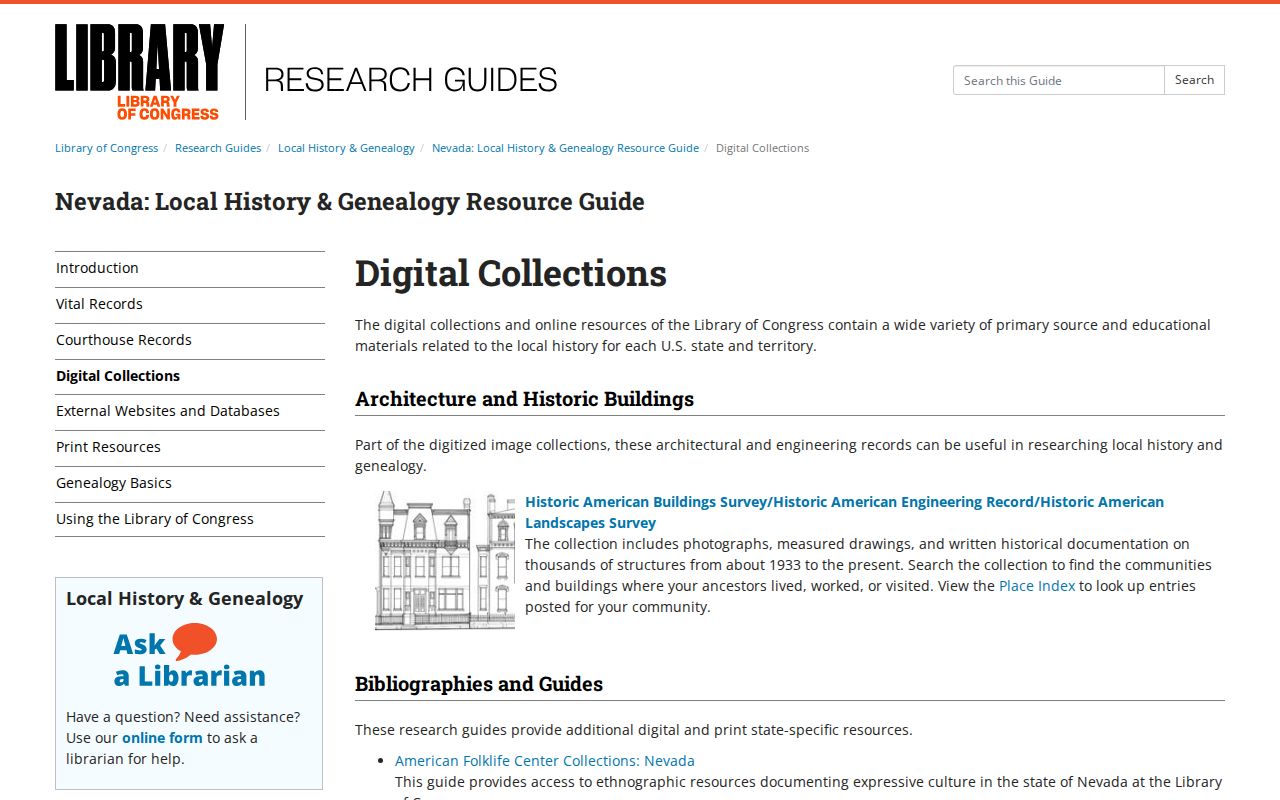
Keep the sheet, year, street, block, and building label with any map observation.
Elko Directory Before 1869
Elko County was created on March 5, 1869, from part of Lander County, and Elko became the county seat. That date is a useful historical boundary for a city-directory search. A person associated with the present-day Elko area before county creation may be found under the predecessor jurisdiction rather than under Elko County. The county plan also records acceptance of a courthouse in January 1870, which helps frame where early civic material begins without inventing an unverified courthouse-fire story.
This county-formation detail is a practical historical check: use the 1869 Nevada statute to anchor the jurisdiction, then search early newspapers, Recorder material, maps, and museum collections with the date and geography clearly labeled.
A city-directory result is more reliable when it retains the historical county name, the record date, and the source's own wording instead of projecting modern boundaries backward.