
Elko Previous Residents by Era
The source for an Elko address depends on its period. Modern parcel and Recorder tools help start a current-to-past chain. Earlier years require book and page references, legal descriptions, maps, local newspapers, and archive staff. Each source establishes a distinct fact. A deed can show transfer roles and a date. A directory or newspaper can place a name at an address on a publication date. A Sanborn map can identify a building's layout or use, but it does not establish occupancy.
| Evidence source | Era or coverage | Where to begin | What it can show |
|---|---|---|---|
| Recorder Landmark index | 1984 forward online; images from 1993 when available | Elko County Recorder | Recorded names, instrument role, date, APN, legal description, and image availability |
| Recorder books and legal search | Earlier parcel work and older additions | Recorder office, book and page, legal description, or Alpha path | Pre-index document trail and historical property descriptions |
| Local newspapers and library holdings | Elko newspaper runs with documented gaps | Elko County Library and UNLV holdings | Dated address, event, organization, obituary, or advertisement clues |
| Sanborn map | Verified August 1897 item, three sheets | Library of Congress | Street, block, lot, building label, and physical context |
| Permit, photo, or manuscript lead | Depth and retention not fully verified | City permit portal, Library, or Museum Archives | Building-history lead or collection reference, not a complete household list |
For recent previous residents, begin with the current parcel and the latest recorded deed. For an older home, shift quickly to legal description, maps, and dated local sources. Elko County was created in 1869, so a search before that date may belong in predecessor Lander County records. That jurisdiction change matters more than a modern place name.
Elko Previous Residents and Recorder Cutoffs
The Elko County Recorder public-records information says the online index begins in 1984 and is updated live. Document images can be viewed or printed from 1993 forward when available. These dates are a practical dividing line for previous-resident research. A result before the image layer may still supply a name, instrument, book and page, or legal clue, but an office or earlier-record route may be needed to examine the underlying material.
Landmark supports name, document, book and page, consideration or tax stamp, parcel ID, record date range, instrument number, and legal searches. A search by name should include variants, and a relevant line item may reveal additional names. The county disclaimer says to check spelling variants and does not warrant completeness or accuracy. Save the displayed role, rather than assuming every indexed person owned or occupied the address.
The Recorder's public records page explains the online and image coverage used in an Elko address trail.
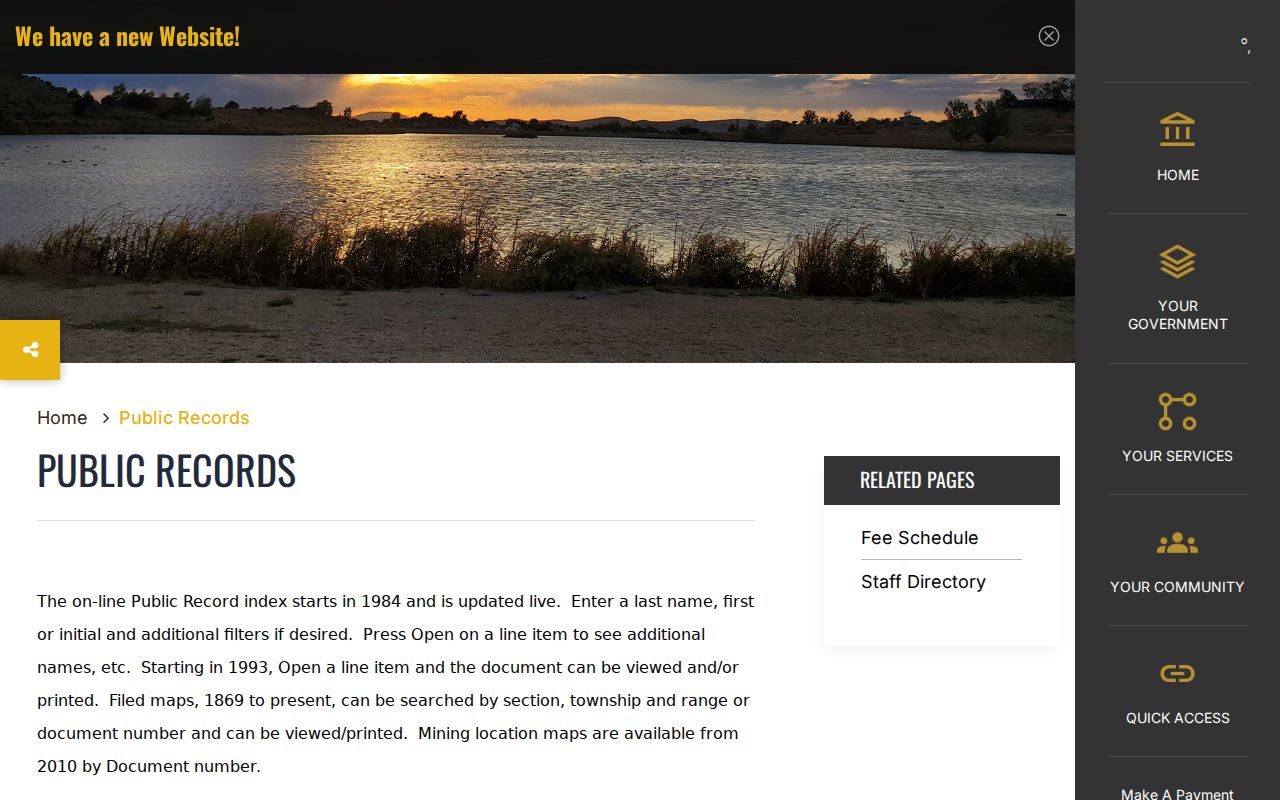
The coverage dates tell a researcher when an online result can be followed by a document image and when a different access channel is needed.
The Recorder Landmark index provides the captured name, document, book, page, parcel, and legal-search interface.
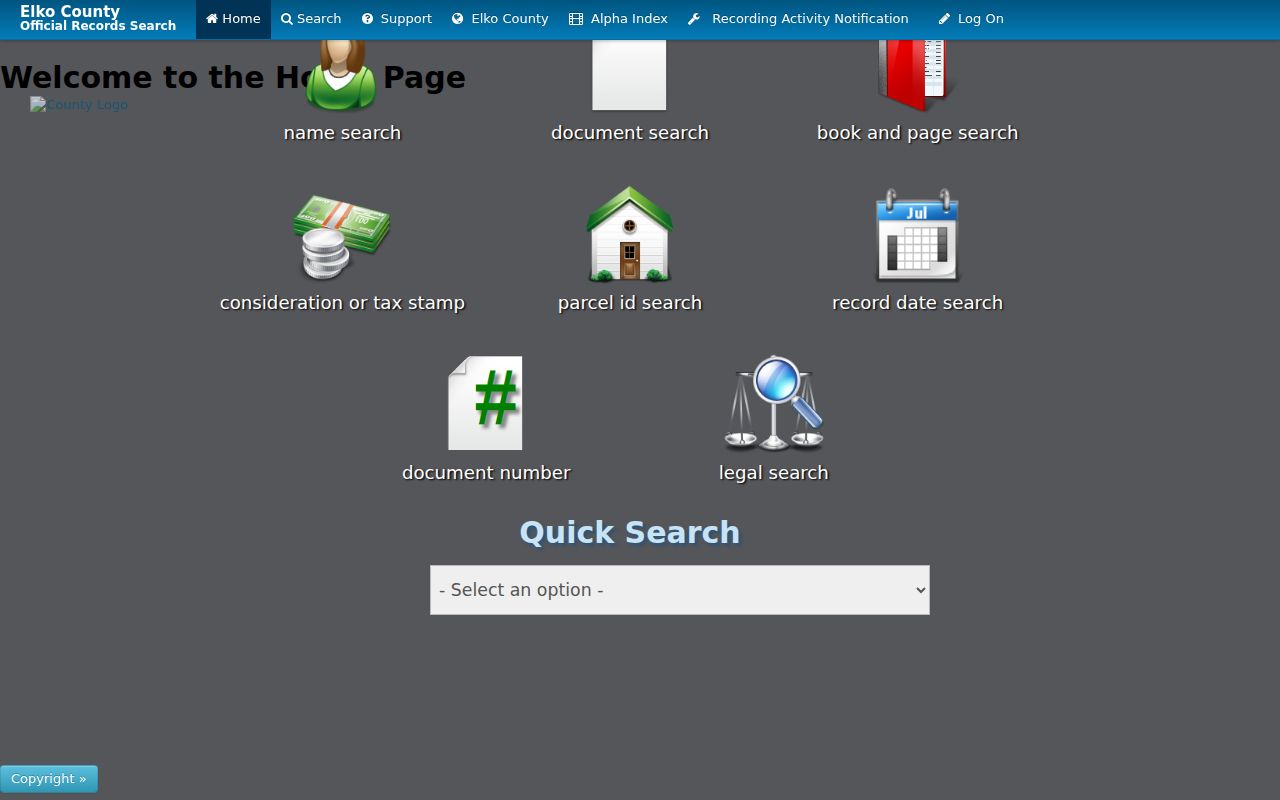
Use a recorded instrument as a dated link in the chain, then corroborate any household conclusion with an independent source.
Elko Addition Books for Previous Residents
Older subdivisions often resist an address-only search. The Recorder's Alpha Search addition and land mode supplies a fallback that uses section, township, range, and addition controls. Its research note says addition index books are available through 1989 and that additions created after 1989 are computer-only. This is a records mechanics point, not a statement that every address has a complete image trail.
When a current APN does not bridge to a historic result, carry forward the lot and block, section-township-range, addition name, and any older legal wording from the last confirmed deed. Filed maps can help connect an old addition or subdivision label to later parcel information. The legal description is usually more stable than the street address after subdivision, merger, annexation, or a changed parcel number.
The Recorder Alpha addition-books index shows the land and addition route available for older Elko research.
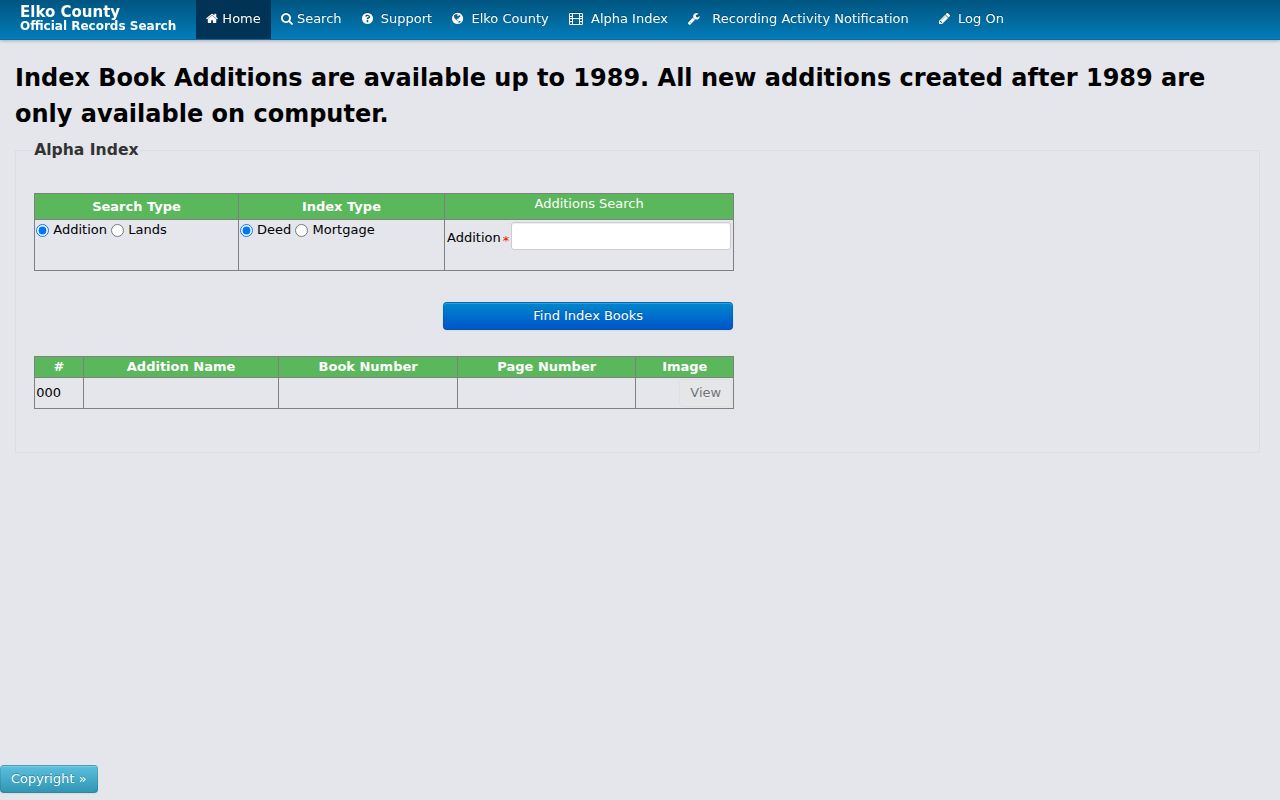
The 1989 addition-book note is useful for choosing between the book path and the later computer index.
Elko Previous Residents Need Two Evidence Types
For a house or storefront, use at least two classes of evidence before assigning a person to the place. An owner, an occupant, a business operator, and a person mentioned in a newspaper can be different people. A deed provides the strongest property-chain evidence, while a map establishes physical layout. A permit is a building-history lead. A directory image or an exact newspaper item may provide a dated address clue. Label those roles instead of collapsing them into one claim.
| Evidence | Capture for the Elko trail | Limit |
|---|---|---|
| Recorded deed or map | Instrument, legal description, APN, grantor, grantee, and recording date | Does not prove a person lived at the property |
| Directory or newspaper | Title, date, page or image, exact spelling, address, and role | Publication claims can have OCR errors and coverage gaps |
| Sanborn sheet | Sheet, year, street, block, building label, and nearby landmark | Shows built context, not ownership or occupancy |
| Permit or archive item | Permit or accession number, date, parcel or service address, and status | Retention, public depth, and rights can limit access |
Note: Preserve a source's role and date so a later correction can distinguish a historic address clue from property ownership.
Elko Deed Chain for Past Residents
A backward deed chain starts with the parcel, not with a person name. Pull the current Assessor owner and location, APN, legal description, and any sale or instrument clue. Then use the Recorder to locate the current acquisition. The grantor on that deed is the party who transferred the interest. Searching that prior owner as a grantee can identify the earlier acquisition, and the sequence can continue back through the records. A changed legal description, parcel split, or subdivision often needs a map bridge before proceeding.
- Search the Elko County Assessor by street, owner, or APN and retain the displayed parcel and legal details.
- Use the APN, owner, date range, or instrument number in Recorder Landmark to find the latest relevant deed and record its grantor, grantee, document number, and recording date.
- Search the prior owner as a grantee to locate that person's earlier purchase, then test the legal description against the same parcel or mapped addition.
- Repeat one confirmed transfer at a time. For older material, move to book and page, legal-description, Recorder-office, or Alpha addition and land routes.
- Keep a gap note when the legal description changes without a documented bridge. Do not use an Assessor sale line as the deed itself.
- Grantor and grantee
- The grantor transfers an interest in the recorded instrument. The grantee receives it. These roles do not by themselves identify a resident.
- Chain of title
- A documented sequence of property transfers linked by records, legal descriptions, and dates.
- Legal description
- The recorded parcel wording, such as lot, block, addition, or section-township-range. It can outlast a changing street address.
Elko Sanborn Maps Before Past Residents
The verified Library of Congress Elko Sanborn resource is dated August 1897 and contains three sheets. It can connect a street, block, lot, building label, hotel, store, church, or public institution to a historical place. Read the sheet with surrounding streets and landmarks, then compare it with a dated newspaper, directory result, and the legal description where a property connection is appropriate.
Additional Sanborn years were reported in discovery work, including 1885, 1904, 1907, and 1912, but their item-level URLs and sheet coverage were not fully verified. Do not fill that gap with a guessed map citation. The 1897 image is a reliable starting point for built-environment context, not a title record and not proof of who lived inside a building.
Elko Previous Residents in Directories and Census
Property owners are only part of an address history. Dated directories, census schedules, obituaries, and newspapers can help identify past households, including people who did not own the property. No official, publicly viewable Elko city-directory scan with a verified publisher, year, page, and sample entry was located during the research. The Elko County Library holds local and regional phonebooks, newspapers, maps, microfilm, vertical files, and Nevada collections, so a focused request for a street, surname, and date range is the honest next step.
Pair a confirmed directory or newspaper year with the relevant census period, then compare spelling, household members, street, and role. A simple record flow is: confirmed street or legal description → Library or archive directory/newspaper clue → matching census household or obituary context → Recorder or map check. Retain the title, issue date, page or image, and repository. The collections and their access limits are described in more depth on the Elko city directory page.
Elko Library and Museum for Past Residents
The Elko County Library is the local fallback when a directory scan or newspaper image is not openly searchable. Its documented resources include local and area newspapers, phonebooks, maps, atlases, microfilm, mining material, state documents, and vertical files. Ask for one street or surname, alternate spellings, a date range, and the type of item needed. A bounded request can return a citation, a digitization status, a known gap, or a not-held result.
The Library local-history resources appear in this captured page.
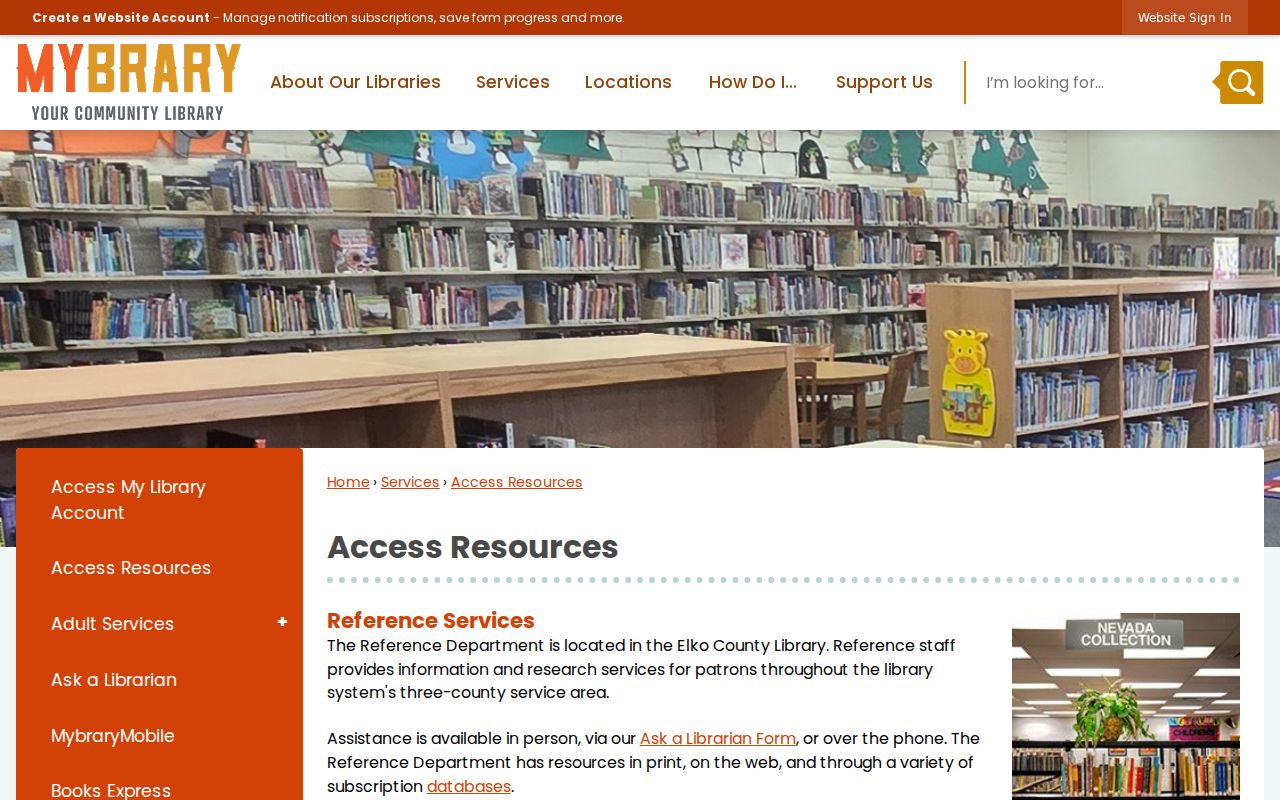
The collection is a research route, not a guarantee that a particular address or directory year is present online.
The Northeastern Nevada Museum Library and Archives is an appointment-only source for historic newspapers, maps, letters, photographs, and manuscripts. Ask for an accession or collection title and a time range, not only a surname. Its archivist can distinguish on-site, off-site, unindexed, digitized, and restricted material.
The Museum research page is shown in the captured archive reference.
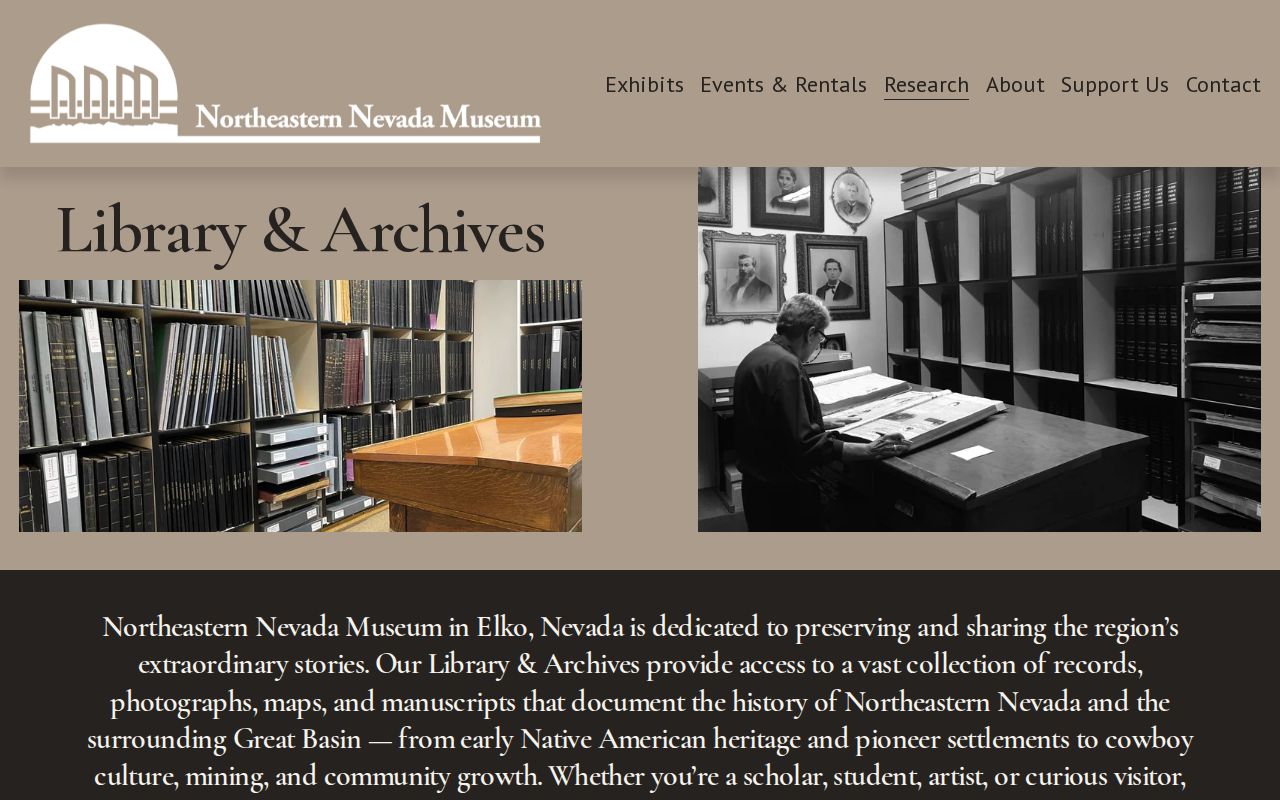
Museum photographs and manuscripts add context to an Elko address trail only when their caption, date, and provenance are retained.
Elko Permit Trails for Previous Residents
The City of Elko permit portal is a later link in the house-history chain. It supports public information search and has observed parcel-number, permit-number, permit-type, and service-address controls. A resident-access parcel number is entered without dashes, and a service address must be chosen from the autocomplete list. It can reveal a building-history lead after the legal address is anchored through Assessor and Recorder records.
Permit-history retention and the depth of public results were not confirmed with a sample record. Treat a result as a lead, capture the permit number, type, parcel or service address, date, and status, then ask the City for the public record if needed. Do not assume that a permit applicant, contractor, or contact was a household resident.
The Elko permit search shows the public search controls used for this step.
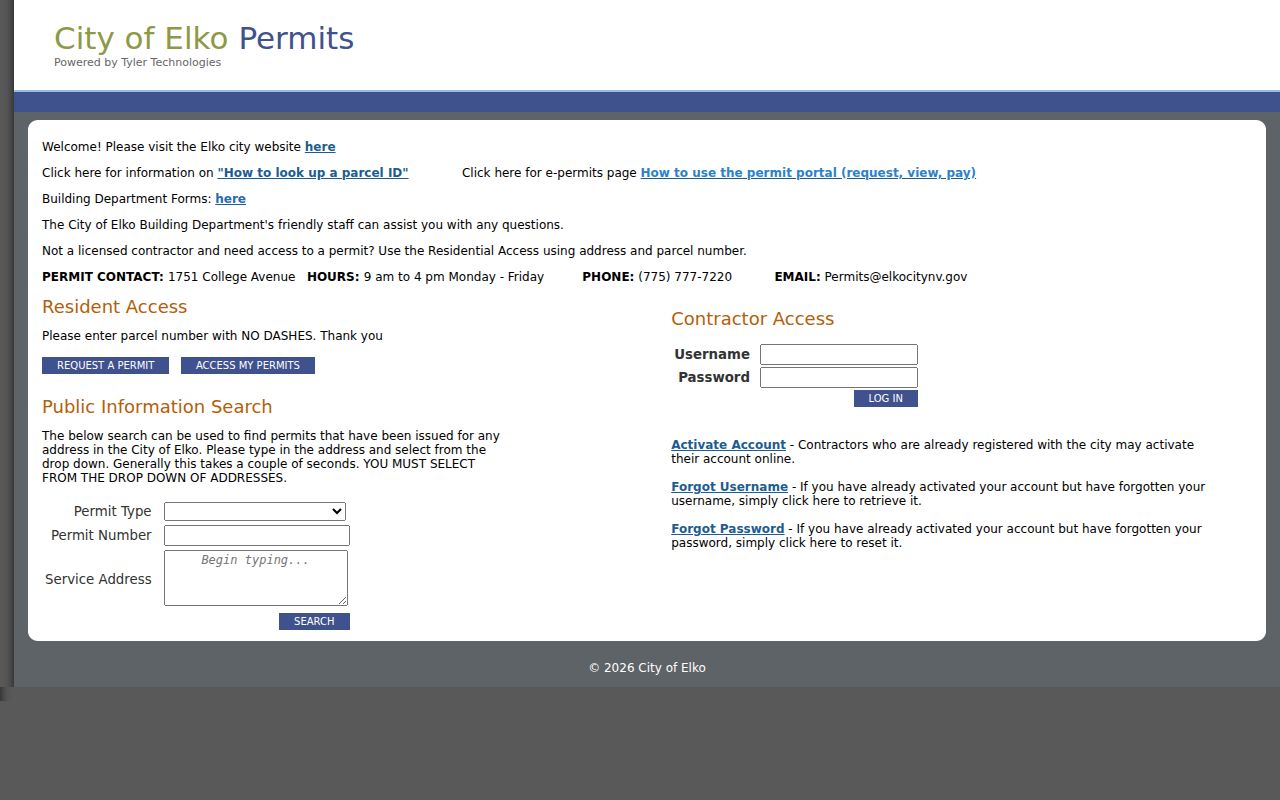
A permit can date work at a property, while the deed, map, and household sources answer separate questions.
Elko Before County Formation
Elko County was created on March 5, 1869 from part of Lander County, and Elko became the county seat. That date changes the records route for the earliest previous-resident research. A modern Elko address does not mean that the oldest relevant court, land, or local-government record will sit under Elko County. For a date before the county's creation, search the predecessor jurisdiction and label it clearly in the research notes.
The 1869 Nevada statute provides the county-formation context for this older-record boundary.
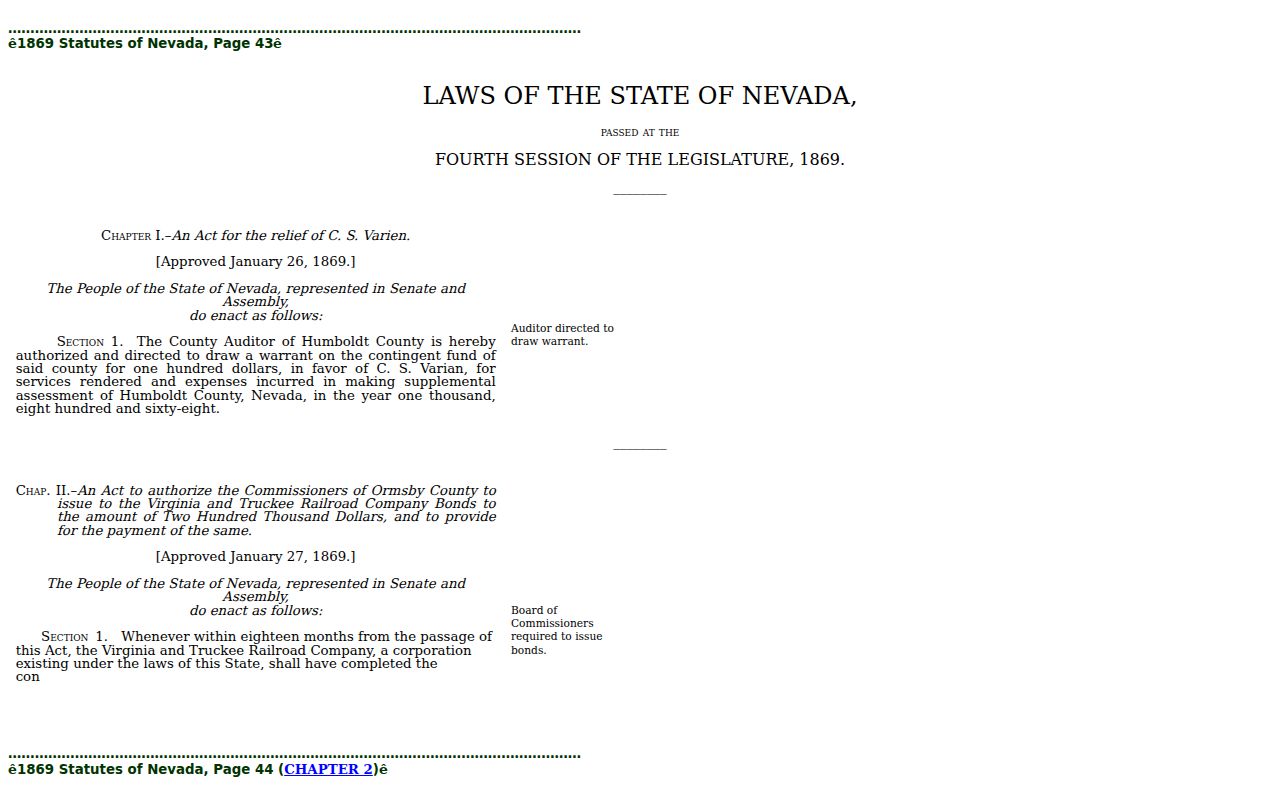
Using the right jurisdiction first prevents an early address trail from being marked missing when it was simply filed elsewhere.